
Unable to find what you're searching for?
We're here to help you find itMaster deep learning with PyTorch tensors, autograd, and CNNs. Koenig provides expert-led training and hands-on projects to help you achieve industry-recognized PyTorch proficiency.


500K+ certified professionals



























Explore Deep Learning certification and training courses — delivered live by certified instructors.
Deep Learning is a branch of machine learning that uses artificial neural networks to model and solve complex data-driven problems, published by frameworks such as TensorFlow, PyTorch, and Keras. It enables systems to automatically learn hierarchical representations from large volumes of data, excelling in tasks like image recognition, speech processing, and natural language understanding. Within the AI stack, it sits beneath generative AI and above classical machine learning, relying on layered architectures for feature extraction and decision-making. Core components include TensorFlow, an end-to-end platform for building and deploying models; PyTorch, a flexible framework favored for research and dynamic computation; Keras, a high-level API for rapid prototyping; Convolutional Neural Networks (CNNs) for spatial data like images; Recurrent Neural Networks (RNNs) for sequential data such as text and speech; and Transformers, which power advanced language models through self-attention mechanisms. These tools collectively enable development across computer vision, NLP, and generative AI applications. This technology is primarily for data scientists, machine learning engineers, and AI researchers who require advanced modeling capabilities to extract insights from unstructured data. Their work benefits from Deep Learning’s ability to automate feature discovery and deliver high accuracy in pattern recognition, making it essential for developing intelligent systems in production and research environments.
Python Programming
Write functions, use loops and data structures like lists and dictionaries
Linear Algebra
Perform matrix-vector operations and understand linear transformations
Calculus Fundamentals
Understand derivatives, partial derivatives and the chain rule
Probability Basics
Apply core probability concepts and common distributions
Machine Learning Concepts
Explain how models learn from data and evaluate performance
Data Handling with NumPy
Manipulate arrays and perform vectorized operations using NumPy
The building blocks every Deep Learning solution is made of
See what your official Deep Learning certification looks like. Download a sample — then let our advisors map the fastest path to earning the real one.

Four formats. One quality standard. Every option comes with the same expert instructors, official courseware, and money-back guarantee.
Every factor that determines whether you actually pass your Deep Learning exam — rated across every training format available.
| Criteria | Koenig | Free Platform | Note | Self-Paced Platform | ALP Provider | Legacy Provider |
|---|---|---|---|---|---|---|
| Curriculum and Technical Depth | ||||||
| Hands-on Lab Hours | High | Minimal | Focuses on Deep Learning practical application time. | Variable | Moderate | Low |
| Framework Coverage (PyTorch/TensorFlow) | Comprehensive | Fragmented | Depth of Deep Learning library implementation. | Varies | Standard | Limited |
| Pre-requisite Skill Level | Intermediate | Varies | Required mathematical and coding proficiency. | Flexible | Intermediate | Beginner |
| Instructor and Infrastructure | ||||||
| Instructor Industry Experience (Years) | 10+ | N/A | Years of professional Deep Learning deployment. | N/A | 5-10 | 3-5 |
| Cloud GPU Access | Availability of dedicated compute for Deep Learning. | Limited | Optional | |||
| Post-Course Portfolio Support | High | Guidance on Deep Learning project documentation. | Moderate | Low | ||
| Assessment and Validation | ||||||
| Project-Based Assessment | Mandatory | Validation of Deep Learning model development. | Self-graded | Standard | Optional | |
| Certification Validity | Industry Recognized | Recognition of Deep Learning competency. | Certificate of Completion | Provider Specific | Internal | |
| Peer Interaction | High | Community-based | Networking opportunities for Deep Learning practitioners. | Minimal | Moderate | Low |
| Delivery and Accessibility | ||||||
| Live Instructor Support | Real-time | Direct access for Deep Learning troubleshooting. | Scheduled | Limited | ||
| Course Update Frequency | Quarterly | Irregular | Keeping pace with Deep Learning research. | Variable | Bi-annually | Annually |
| Customization Options | High | Tailoring Deep Learning content to enterprise needs. | Moderate | Low | ||
Data sourced from public pricing pages and review platforms. Accurate as of March 2026. Partial = available in select regions only.
Verified reviews from learners certified on Azure, AI, Security, and more.
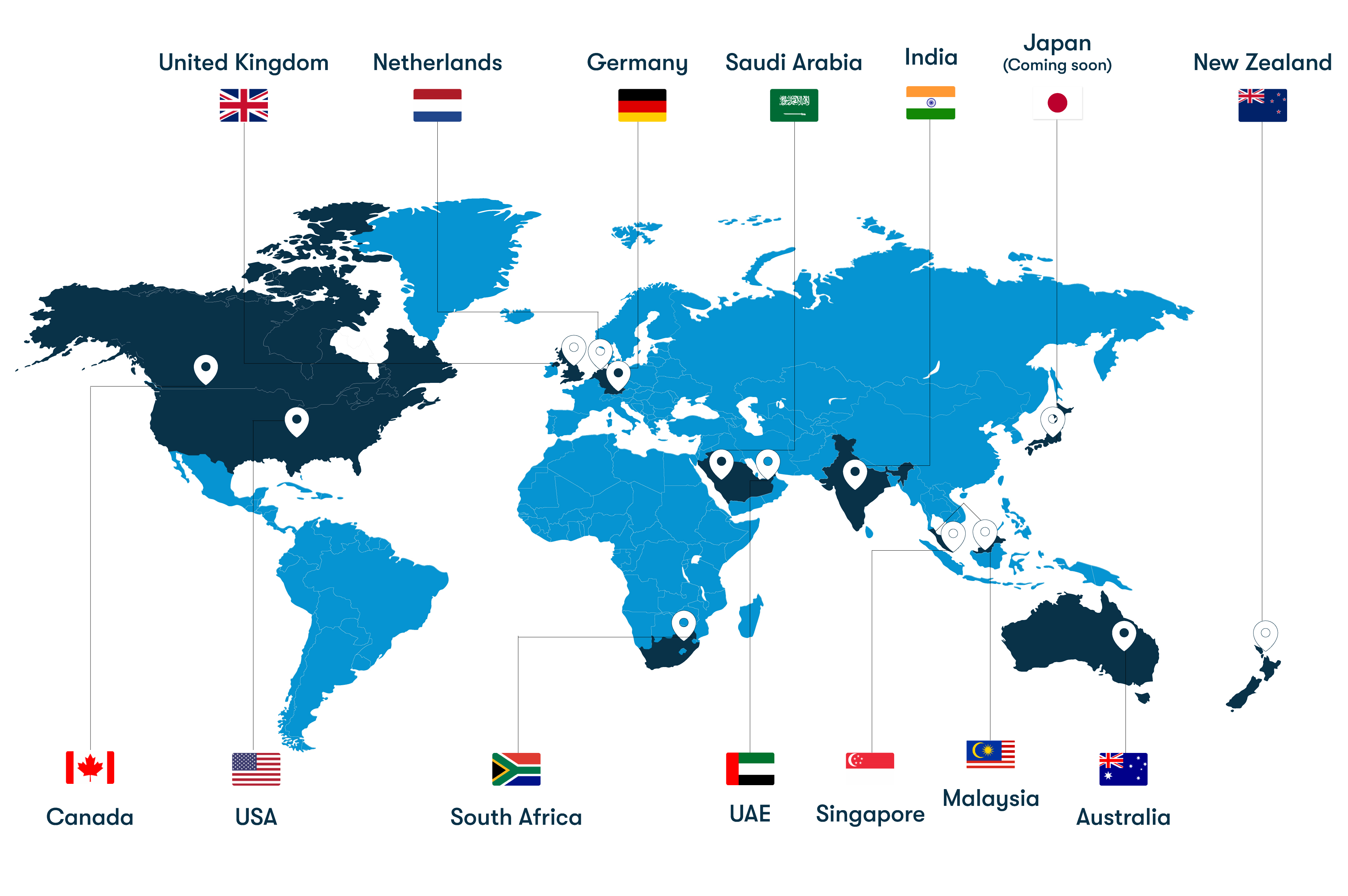
From our headquarters in India to training centers across UAE, Iraq, Saudi Arabia, UK, USA, Singapore, Australia, and more — Koenig delivers Microsoft certification training in 50+ countries.