
Unable to find what you're searching for?
We're here to help you find itBuild retrieval-augmented generation systems, execute hybrid searches with dense and sparse vectors, and optimize HNSW and IVF-PQ indexes using Milvus. Train with Koenig’s certified instructors through hands-on labs and real-world projects to earn recognized vector database credentials.


500K+ certified professionals























Explore Vector Databases certification and training courses — delivered live by certified instructors.
A vector database is a specialized data management system designed to store, index, and retrieve high-dimensional vector embeddings, enabling efficient similarity searches across unstructured data such as text, images, and audio. Published by multiple vendors and open-source communities, it solves the challenge of semantic search and retrieval in AI applications by measuring similarity in vector space. Within modern data architectures, vector databases sit between machine learning models and application layers, serving as the foundation for generative AI, recommendation engines, and real-time personalization. Key components include Weaviate, a vector-native database optimized for semantic search and retrieval-augmented generation with built-in vectorization; OpenSearch, a search engine supporting hybrid queries that combine keyword and vector search for complex filtering and relevance ranking; and pgvector, a PostgreSQL extension that enables vector similarity search within relational databases, allowing joint queries on structured and unstructured data. Each component supports scalable indexing using algorithms like HNSW and IVF, with options for quantization and distributed deployment. This technology is for data engineers, machine learning practitioners, and AI application developers who need to implement scalable, low-latency similarity search in production systems. They benefit from reduced infrastructure complexity, improved retrieval accuracy in generative AI workflows, and the ability to run hybrid queries across vector and operational data without synchronization overhead.
Vector Fundamentals
Explain vector embeddings, dimensionality, and semantic similarity in high-dimensional space
Embedding Models
Use models like Voyage AI or OpenAI to generate vector embeddings from text
Database Indexing
Create and manage HNSW or FLAT vector indexes for approximate nearest neighbor search
Similarity Metrics
Apply cosine, dot product, or L2 distance to measure vector proximity
Query Workflows
Execute k-NN and range queries using $vectorSearch or equivalent operators
Tooling Setup
Configure Docker, CLI tools, and API keys for vector database environments
The building blocks every Vector Databases solution is made of
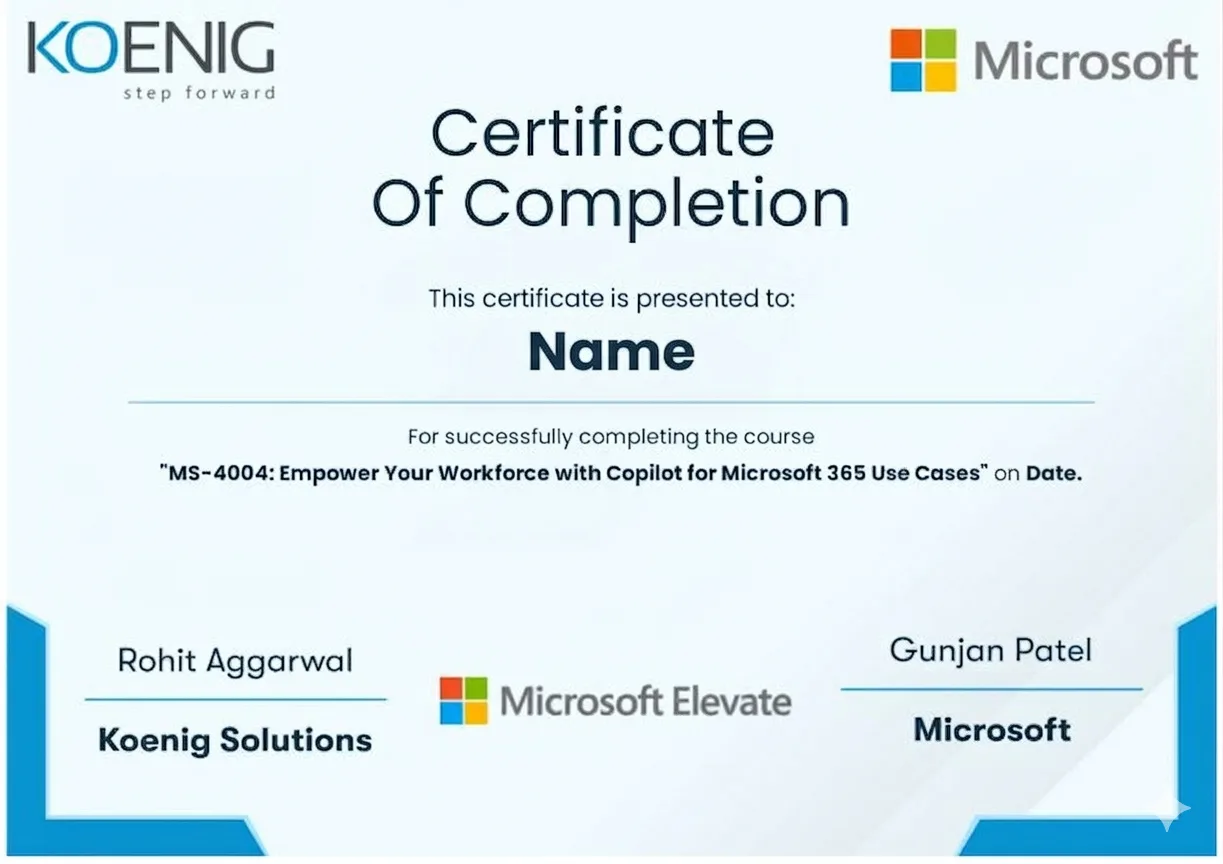
See what your official Vector Databases certification looks like. Download a sample — then let our advisors map the fastest path to earning the real one.
 PCP-001Pinecone Certified Professional
MDB-DEV-001MongoDB Associate Developer
DBC-ML-001Databricks Certified Machine Learning Professional
N/AN/A
N/AN/A
N/AN/A
Official credential badges — shareable on LinkedIn
PCP-001Pinecone Certified Professional
MDB-DEV-001MongoDB Associate Developer
DBC-ML-001Databricks Certified Machine Learning Professional
N/AN/A
N/AN/A
N/AN/A
Official credential badges — shareable on LinkedIn
Four formats. One quality standard. Every option comes with the same expert instructors, official courseware, and money-back guarantee.
Every factor that determines whether you actually pass your Vector Databases exam — rated across every training format available.
| Criteria | Koenig | Free Platform | Note | Self-Paced Platform | ALP Provider | Legacy Provider |
|---|---|---|---|---|---|---|
| Curriculum and Practicality | ||||||
| Hands-on Lab Hours | 15 hrs | 2 hrs | Based on average guided lab time for Vector Databases training. | 5 hrs | 20 hrs | 10 hrs |
| Real-world Use Case Coverage | High | Low | Focus on RAG, semantic search, and recommendation systems. | Low | High | Medium |
| Instructor Industry Experience (Years) | 10+ | N/A | Average years of experience in AI/ML engineering. | N/A | 12+ | 8+ |
| Technical Scope | ||||||
| Support for Pinecone | Coverage of managed vector search services. | Partial | ||||
| Support for Milvus | Coverage of open-source vector database engines. | Partial | ||||
| Support for Weaviate | Coverage of vector-native search engines. | Partial | ||||
| Flexibility and access | ||||||
| Live Instructor Access | Availability of real-time Q&A for Vector Databases. | |||||
| Course Updates Frequency | Quarterly | Ad-hoc | Frequency of content refreshes for evolving AI tools. | Bi-annual | Monthly | Annual |
| Certification/Completion Badge | Proof of completion for Vector Databases training. | |||||
| Results and trust | ||||||
| Corporate Training Track Record | High | Low | Experience in delivering enterprise Vector Databases training. | Low | High | Medium |
| Student Satisfaction Rating | 4.5/5 | 3.5/5 | Aggregated user feedback scores. | 3.8/5 | 4.7/5 | 4.0/5 |
| Post-Training Support | Access to community forums or mentor support. | |||||
Data sourced from public pricing pages and review platforms. Accurate as of March 2026. Partial = available in select regions only.
Verified reviews from learners certified on Azure, AI, Security, and more.
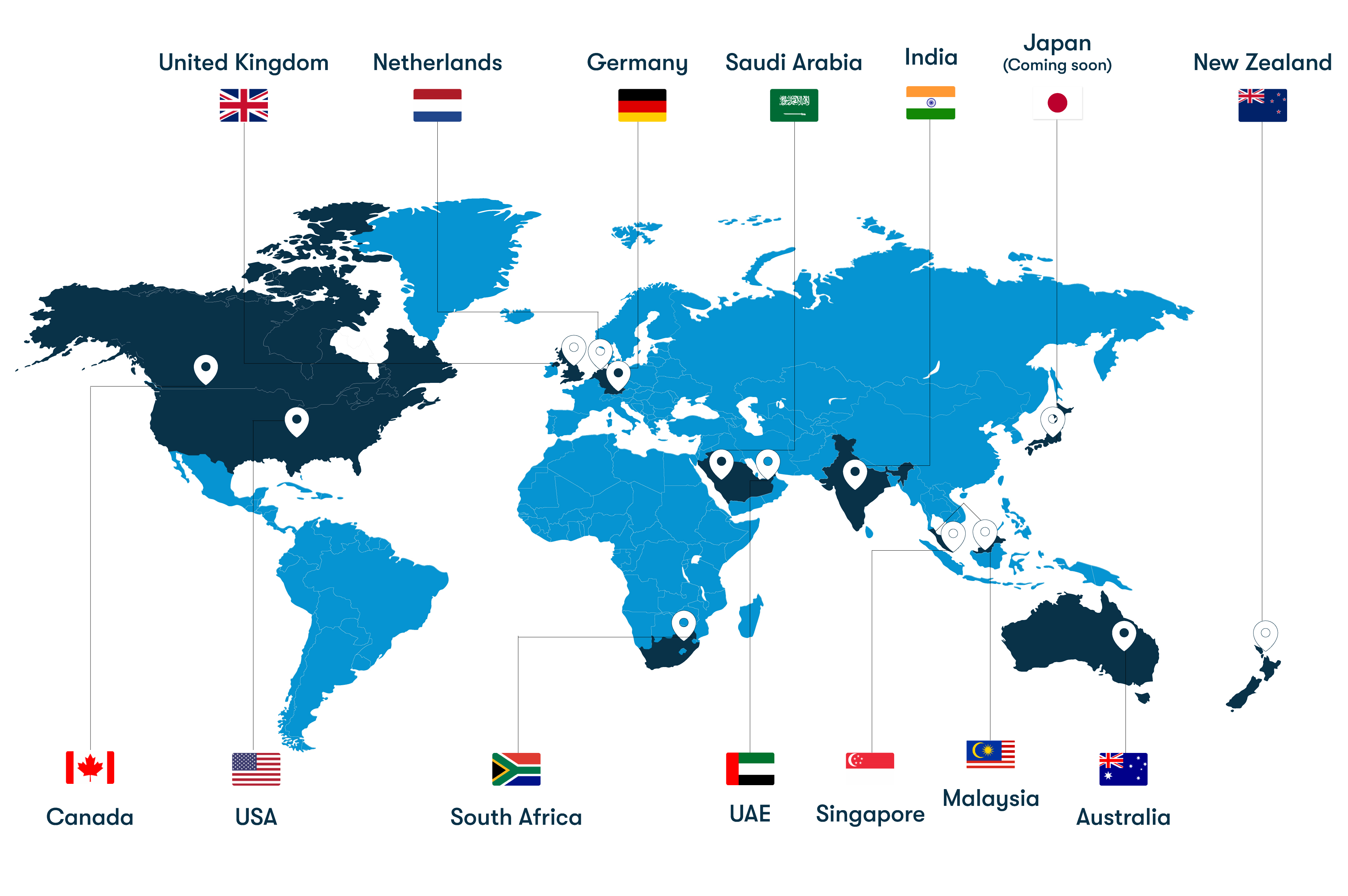
From our headquarters in India to training centers across UAE, Iraq, Saudi Arabia, UK, USA, Singapore, Australia, and more — Koenig delivers Microsoft certification training in 50+ countries.